

Understanding Thumb CMC Arthritis
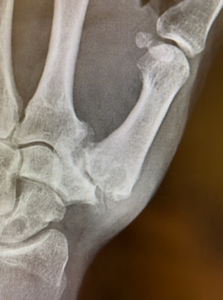
Thumb carpometacarpal (CMC) arthritis, also known as thumb basal joint arthritis or first carpometacarpal osteoarthritis, is one of the most common forms of hand arthritis. This condition affects the joint at the base of the thumb where the thumb metacarpal bone meets the trapezium bone of the wrist. Thumb CMC arthritis predominantly affects postmenopausal women, with radiographic signs appearing in approximately one-third of women older than 70 years.
Symptoms of Thumb Arthritis
The most common symptom of thumb arthritis is pain at the base of the thumb joint. The pain can be aggravated by daily activities such as pinching, opening jars and writing. In severe cases of thumb basal joint arthritis, a bony bump develops at the base of the thumb as its collapses into the palm, causing a zig-zag deformity.
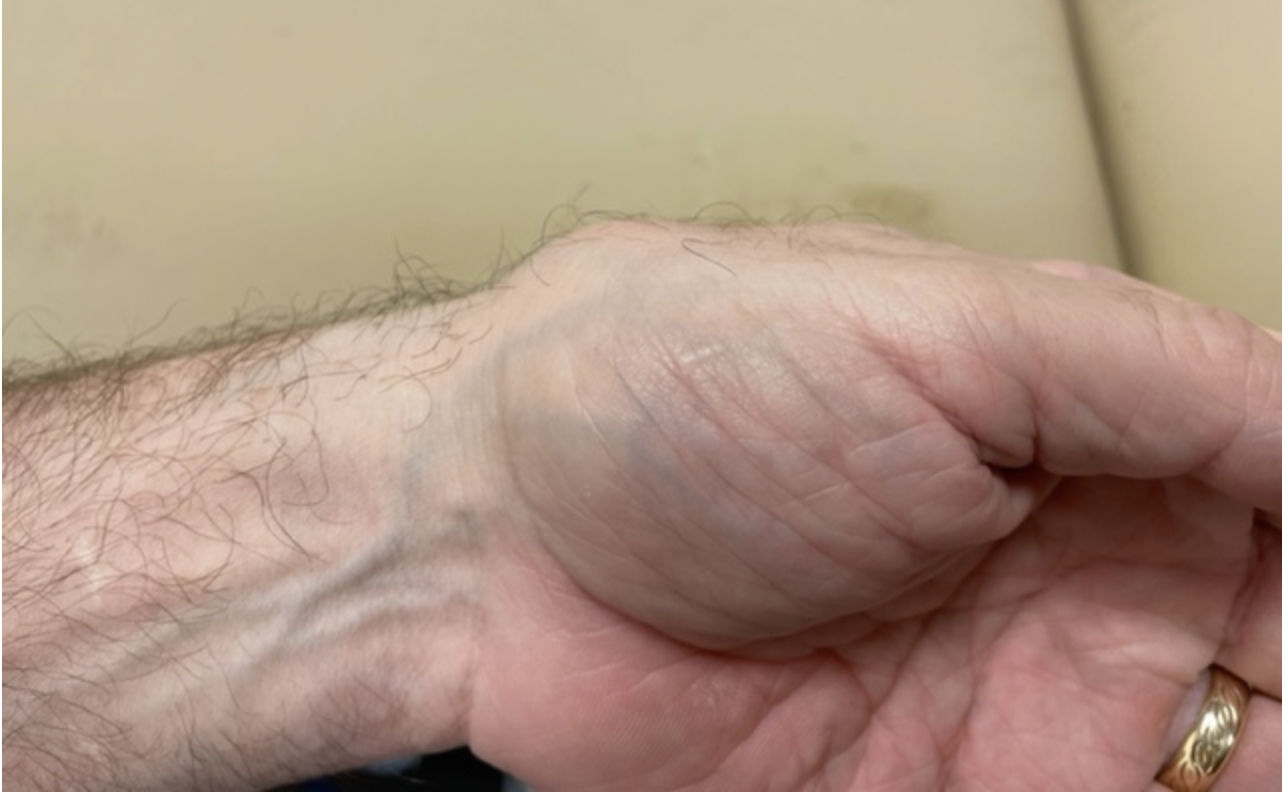
The diagnosis of thumb arthritis is made by history and physical evaluation. Frequently, people with thumb arthritis have decreased grip strength, loss of strength, limited motion, pain with activity such as twisting. X-rays are used to confirm the diagnosis, but symptoms often do not correlate with x-ray findings.
Conservative Treatment Options
First-Line Non-Surgical Treatments
Current evidence supports a stepwise approach beginning with comprehensive non-surgical management. Conservative treatment should be initiated as soon as pain starts, not after deformity has developed.
Activity Modification and Ergonomic Principles
-
Avoiding activities that exacerbate symptoms
-
Using adaptive tools and equipment to decrease joint stress
-
Implementing ergonomic techniques for daily activities
Splinting
Splinting is one of the most effective conservative treatments. A 2025 network meta-analysis found that rigid CMC-metacarpophalangeal (MCP) splints provide clinically important pain reduction and functional improvement at medium-term follow-up (3-12 months). Long custom thermoplastic CMC-MCP splints are associated with better pain relief, while short custom thermoplastic CMC splints provide the best functional increase. Splints should be worn during daily activities (minimum 4 hours per day) and removed during rest, sleep, and bathing.
Hand Exercises
Therapeutic exercises targeting muscle strength, joint mobility, stability, and proprioception are highly effective. A 2025 systematic review demonstrated that hand exercises provide clinically important short-term pain reduction and grip strength improvement. Exercise programs typically include:
-
Thumb opposition exercises
-
Range of motion activities
-
Neuromuscular control training
-
Strengthening exercises
Multimodal Treatment
Combining multiple conservative therapies provides superior outcomes. A 2025 network meta-analysis showed that multimodal treatment (combining two or more non-pharmacologic interventions or non-pharmacologic with pharmacologic treatment) produces clinically important short-term pain reduction.
Medications
-
Topical NSAIDs: Topical diclofenac gel is preferred over oral NSAIDs due to superior safety profile. Clinical trials show significant pain reduction when applied three times daily over the thumb base.
-
Oral NSAIDs: Can be used for pain management, often in combination with topical formulations
-
Acetaminophen: May be used as rescue medication (maximum 3000 mg per day)
Corticosteroid Injections
Intra-articular corticosteroid injections should be considered for patients who have not responded to initial non-invasive treatment. Meta-analysis data shows corticosteroid injections reduce pain with activity compared to hyaluronic acid at 3-6 months follow-up. However, no differences in pain at rest or grip/pinch strength have been demonstrated between different injection agents.
Surgical Treatment Options
Surgery is indicated when pain relief is not achieved after at least 6 months of conservative treatment.
Trapeziectomy
Simple Trapeziectomy
Removal of the trapezium bone alone is an effective, simple, and low-cost procedure. Recent evidence from the British Society for Surgery of the Hand (2025) indicates that additional procedures such as interposition or ligament reconstruction do not appear to confer any benefit over excision of the trapezium alone.
Trapeziectomy with Ligament Reconstruction and Tendon Interposition (LRTI)
This is the most commonly performed technique in the United States (>90% of CMC surgeries). While widely used, a 2015 Cochrane review found no superior outcomes compared to other surgical techniques for pain and function.
Arthrodesis (Joint Fusion)
CMC arthrodesis involves fusing the thumb metacarpal to the trapezium. A 2025 meta-analysis comparing arthrodesis to LRTI found:
-
Advantages: Significantly higher key pinch strength
-
Disadvantages: Higher reoperation rates and postoperative complication rates, including risk of nonunion
-
Best for: Patients requiring high pinch strength, such as manual laborers
Joint Replacement (Arthroplasty)
Total joint prosthesis or interposition implant arthroplasty represents newer surgical options. New designs show promising early results with low complication rates and quick return to function, though implants are expensive and long-term outcome data is still being collected. Potential complications include implant failure.
Other Surgical Options
-
Suspensionplasty: Suture button suspensionplasty shows comparable outcomes to LRTI with shorter operative times
-
Metacarpal osteotomy: Subtraction osteotomy of the first metacarpal
-
Arthroscopic debridement: For early-stage disease
Joint denervation: Direct excision of nerves innervating the joint
Surgical Outcomes and Complications
All surgical techniques demonstrate efficacy in pain relief and functional improvement, with no single procedure showing clear superiority for all patients. Complications affect approximately 1.3% of patients and may include:
-
Sensory nerve disturbances (any operation)
-
Proximal migration of thumb metacarpal (trapeziectomy)
-
Implant failure (joint replacement)
-
Nonunion (fusion procedures)
Patients with diabetes and kidney failure have higher rates of short-term complications.
Prognosis
Conservative treatments improve symptoms but do not alter disease progression. Most patients experience meaningful improvement with comprehensive non-surgical management. For those requiring surgery, outcomes are generally favorable with high patient satisfaction rates, though recovery can be lengthy (several months).
Key Takeaways
-
Thumb CMC arthritis is a common condition, especially in postmenopausal women
-
Conservative treatment should be comprehensive and multimodal
-
Rigid CMC-MCP splints, hand exercises, and topical NSAIDs form the foundation of non-surgical management
-
Surgery is reserved for patients who fail at least 6 months of conservative treatment
-
Simple trapeziectomy is effective without need for additional reconstruction procedures
-
No single surgical technique has proven superior for all patients
Why Choose Dr. Chambers for Hand and Wrist Care
At Raleigh Orthopaedic Clinic, Dr. Stephen Chambers specializes in hand and upper extremity surgery. With years of expertise in treating hand and wrist injuries, including Thumb Arthritis Treatment. Dr. Chambers provides comprehensive care—ranging from at home treatments and injections to advanced hand surgery when needed. Patients trust Dr. Chambers and his team for personalized care, effective treatment options, and excellent outcomes and describe Dr. Chambers as a caring, attentive, and skilled surgeon with excellent bedside manner. His amazing team ensures every patient feels supported and informed throughout the process.
If you are experiencing finger pain, swelling, or difficulty with finger movements, don’t wait for symptoms to worsen. Schedule an Appointment with Dr. Chambers today to Thumb Arthritis Treatment. and get back to normal use of your hand . Experience the benefit of specialized hand care close to home at Raleigh Orthopaedics in Raleigh, Cary, Holly Springs, and Wake Forest, North Carolina.
Click Here for More Information