

Treatment for Extensor Tendon Injuries in Raleigh, NC
Overview of Extensor Tendon Injuries
Extensor tendon injuries are common hand and forearm injuries that occur when the tendons responsible for straightening the fingers and thumb are damaged. These injuries typically result from lacerations, crush injuries, or avulsions and require prompt treatment to prevent long-term deformity and functional impairment.
Treatment Options for Extensor Tendon Injuries in Raleigh, NC
Non-Surgical Treatment
Splinting and Immobilization
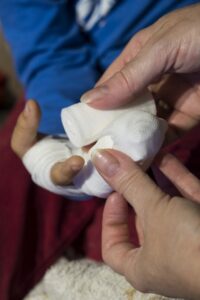
For certain extensor tendon injuries, particularly distal zone injuries (zones 1-3) and some partial lacerations, conservative management with splinting may be appropriate. Static splinting remains the standard of care for uncomplicated thumb injuries and distal finger injuries. The splint maintains the affected joint in extension while allowing healing to occur over 4-6 weeks.
Partial Tendon Lacerations
Selected partial extensor tendon lacerations (involving less than 50% of the tendon width) can be managed without surgical repair. Treatment involves early active motion without splints, allowing patients to return to work within 6 weeks. This approach has shown excellent outcomes with full range of motion recovery and no ruptures when properly selected.
Surgical Treatment in Raleigh, NC
Primary Tendon Repair
Complete extensor tendon lacerations typically require surgical repair. Modern techniques emphasize strong repairs using 4-strand or 6-strand suture methods, which provide greater tensile strength and allow for earlier mobilization. The Wide Awake Local Anesthesia No Tourniquet (WALANT) technique has revolutionized outpatient extensor tendon repair, allowing surgeons to test repair strength intraoperatively while the patient is awake.
Tendon Reconstruction
When tendon length is lost due to severe injury, tendon grafting or local tissue reconstruction may be necessary. Failed repairs or chronic injuries may require extensor tenolysis (release of scar tissue) or tendon reconstruction using grafts.
Rehabilitation Protocols
Early Motion Therapy
Modern rehabilitation emphasizes early protected movement initiated within 3-5 days after surgery. Early motion protocols have improved tendon healing, reduced adhesions, and enhanced final outcomes compared to prolonged immobilization.
Relative Motion Splinting
Relative motion extension and flexion splinting represents a significant advancement in extensor tendon rehabilitation. This technique allows early protected movement while preventing excessive stress on the repair, enabling patients to resume regular activities sooner than traditional 3-4 week immobilization protocols.
Controlled Active Motion (CAM)
CAM rehabilitation protocols involve carefully controlled finger movements within a protective splint. This approach balances tendon excursion (which prevents adhesions) with repair protection (which prevents rupture).
Rehabilitation Timeline
– Weeks 0-1: Splint protection with early gentle motion (if protocol allows)
– Weeks 2-4: Progressive active motion within protective splint
– Weeks 4-6: Gradual increase in motion and light activities
– Weeks 6-8: Strengthening exercises and return to work for most patients
– Weeks 8-12: Full activity resumption
Zone-Specific Rehabilitation
Rehabilitation protocols are tailored to injury location:
– Thumb and distal finger zones: Static splinting remains effective
– Proximal zones: Early motion therapy provides quicker return to function
– Boutonniere deformities: Relative motion splinting improves outcomes
Expected Outcomes
With appropriate treatment, most patients achieve excellent functional recovery. Recent studies show:
– Low complication rates (infection 1%, rupture 1%)
– Minimal pain and functional disability scores
– Grip strength comparable to normative values
– Full range of motion in properly managed cases
– Return to work within 6-8 weeks for most patients
When to Seek Specialist Care
Patients should be referred to a Stephen Chambers, MD Hand specialist for:
– Complete tendon lacerations
– Injuries with associated fractures or nerve damage
– Failed conservative treatment
– Persistent extension lag or stiffness
– Complex injuries involving multiple structures
Conclusion
Extensor tendon injury treatment has evolved significantly, with emphasis on strong surgical repairs, early protected motion, and individualized rehabilitation protocols. Timely diagnosis and appropriate treatment—whether conservative or surgical—are essential for optimal functional recovery and return to normal activities.
Why Choose Dr. Chambers for Hand and Wrist Care
At Raleigh Orthopaedic Clinic, Dr. Stephen Chambers specializes in hand and upper extremity surgery. With years of expertise in treating hand and wrist injuries, including Extensor Tendon Injury, Dr. Chambers provides comprehensive care—ranging from at home treatments and injections to advanced hand surgery when needed. Patients trust Dr. Chambers and his team for personalized care, effective treatment options, and excellent outcomes and describe Dr. Chambers as a caring, attentive, and skilled surgeon with excellent bedside manner. His amazing team ensures every patient feels supported and informed throughout the process.
If you are experiencing wrist pain, swelling, or difficulty with wrist movements, don’t wait for symptoms to worsen. Schedule an Appointment with Dr. Chambers today to Extensor Tendon Injury and get back to normal use of your hand . Experience the benefit of specialized hand care close to home at Raleigh Orthopaedics in Raleigh, Cary, Holly Springs, and Wake Forest, North Carolina.