
Flexor Tendon Injuries Treatment in Raleigh, NC
Tendons connect forearm muscles to fingers. When forearm muscles contract, tendons pull on fingers, allowing fingers to move. There are flexor tendons and extensor tendons on each side of the hand. When the tendon is injured it will be difficult to bend or straighten one or more joints in a finger/wrist. Surgical intervention is required to reattach the two separated ends in order for them to heal and ideally needs to be performed within 2 weeks to prevent a reconstruction. When there is an injury to the tendon, the hand also needs to be checked for nerve injuries which often occur in conjunction.
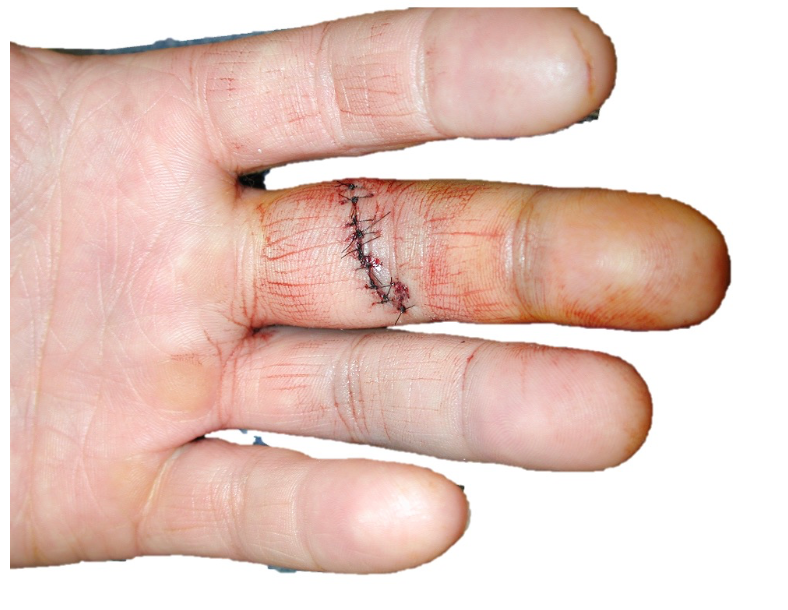
Flexor Tendon Injury
After surgery the injured area will be protected from movement and started on a very specific limited-movement program for several weeks. If unprotected finger motion begins too soon, the repair will likely fail. After four-to-six weeks, the fingers are allowed to move slowly and without resistance.
Healing takes over the next three months after the repair. Full and normal movement of the injured area does not always return after surgery. If it is hard to bend the finger using its own muscle power, it could mean that the repaired tendon is trapped in scar tissue. Scarring of the tendon repair is a normal part of the healing process. But in some cases, the scarring can make bending and straightening of the finger very difficult. Depending on the injury, your doctor may prescribe therapy to loosen up the scar tissue and prevent it from interfering with the finger’s movement. If therapy fails to improve motion, surgery to release scar tissue around the tendon may be required.
Prevention of flexor tendon injuries can be achieved by taking certain precautions, such as avoiding repetitive motions or overuse of the fingers, using proper technique when performing manual tasks, and wearing appropriate protective gear when participating in sports or other activities that may place the fingers at risk of injury.
In conclusion, flexor tendon injuries are a common type of hand injury that can cause pain, swelling, and loss of function in the affected finger. Diagnosis and treatment of these injuries depend on the type and severity of the injury, but may include rest, physical therapy, or surgery. Prevention can be achieved by taking appropriate precautions to avoid repetitive motions or overuse of the fingers, using proper technique when performing manual tasks, and wearing protective gear when participating in sports or other activities that may place the fingers at risk of injury.
Why Choose Dr. Chambers for Hand and Wrist Care
At Raleigh Orthopaedic Clinic, Dr. Stephen Chambers specializes in hand and upper extremity surgery. With years of expertise in treating hand and wrist injuries, including Flexor Tendon Injury. Dr. Chambers provides comprehensive care—ranging from at home treatments and injections to advanced hand surgery when needed. Patients trust Dr. Chambers and his team for personalized care, effective treatment options, and excellent outcomes and describe Dr. Chambers as a caring, attentive, and skilled surgeon with excellent bedside manner. His amazing team ensures every patient feels supported and informed throughout the process.
If you are experiencing finger pain, swelling, or difficulty with finger movements, don’t wait for symptoms to worsen. Schedule an Appointment with Dr. Chambers today to Flexor Tendon Injury and get back to normal use of your hand . Experience the benefit of specialized hand care close to home at Raleigh Orthopaedics in Raleigh, Cary, Holly Springs, and Wake Forest, North Carolina.
Click Here to learn more