Olecranon Bursitis
Olecranon Bursitis (Swollen Elbow) – Raleigh, NC
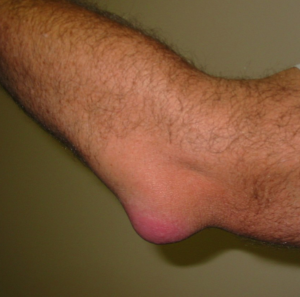
Olecranon bursitis is swelling at the tip of the elbow, where a fluid-filled sac called the bursa normally cushions the bone. When the bursa becomes irritated or inflamed, the elbow may look enlarged or swollen like a “golf ball” at the back of the elbow.
The olecranon bursa helps reduce friction during elbow movement. When inflamed, it can cause pain, swelling, and reduced range of motion.
Causes of Olecranon Bursitis
Olecranon bursitis may result from:
Trauma: bumping the elbow (fall or direct blow)
Repetitive pressure: leaning on elbows (desk work, trades, athletics)
Infection (septic bursitis): redness, warmth, fever may occur
Medical conditions: gout, rheumatoid arthritis, kidney disease
Repetitive leaning on the elbow (students, desk workers, mechanics) is one of the most common causes.
Symptoms
Patients often notice:
Swelling at the back/tip of the elbow
Tenderness or discomfort when bending or leaning on the elbow
Warmth or redness (infection possibility)
Reduced range of motion
Fluid pocket or lump at the elbow
Diagnosis
Evaluation usually includes:
Physical exam to assess swelling, warmth, and tenderness
X-rays to rule out bone spurs or fractures
Aspiration (if needed) — a needle withdraws fluid to test for infection or gout crystals
Aspirating the bursa helps determine whether the bursitis is inflammatory or infected (septic bursitis).
Treatment Options
Treatment depends on whether the bursitis is inflamed or infected.
Non-surgical treatment (most cases)
Rest and avoiding pressure on the elbow
Compression sleeve or padded elbow wrap
Ice and anti-inflammatory medication
Therapy to improve mobility and reduce irritation
Aspiration to remove fluid (select cases)
Most patients improve with non-surgical care.
Surgical treatment (if persistent or infected)
Fluid drainage (aspiration)
Bursa removal (bursectomy) for chronic or recurrent bursitis
If infection is present, antibiotics may be required
Recovery
Most patients improve within 2–6 weeks
Avoid leaning on elbow to prevent recurrence
Infection-related bursitis may take longer and need closer follow-up
Olecranon Bursitis Treatment in Raleigh, NC
Raleigh Wrist specializes in non-operative and surgical management of elbow conditions, including bursitis, fractures, dislocations, and tendon injuries.
Schedule a visit: https://raleighwrist.com/appointments
Same-week appointments are available.
Frequently Asked Questions
Is olecranon bursitis serious?
Most cases are not dangerous, but infected bursitis requires prompt treatment.
How do I know if it’s infected?
Warmth, redness, rapid swelling, or fever are concerning signs — seek care immediately.
Will bursitis go away on its own?
Yes, many cases improve with rest and activity modification.
Can it come back?
Yes, especially if pressure on the elbow continues.