

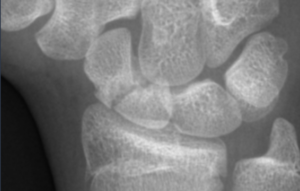
Scaphoid Fractures Treatment in Raleigh, NC
What is a Scaphoid Fracture?
A scaphoid fracture is a break in the scaphoid bone, one of eight small bones in the wrist located on the thumb side. Scaphoid fractures account for approximately 90% of all carpal fractures and occur most commonly in young, active adults, particularly males. These injuries typically result from a fall onto an outstretched hand or sudden backward force on the wrist.
Symptoms and Diagnosis
Common Symptoms
– Pain in the wrist, especially on the thumb side
– Tenderness in the anatomical snuffbox (the hollow area at the base of the thumb)
– Swelling around the wrist
– Difficulty gripping or reduced grip strength
– Pain that worsens with thumb or wrist movement
Diagnostic Imaging
Initial evaluation includes standard wrist radiographs. However, scaphoid fractures can be difficult to detect on X-rays, particularly in the first few days after injury. When clinical suspicion is high despite negative radiographs, advanced imaging is recommended:
– CT scan: Provides detailed bone visualization and is the gold standard for confirming fractures and assessing healing
– MRI: Highly sensitive for detecting occult fractures not visible on X-rays
Treatment Options
Treatment depends on fracture location, displacement, and patient-specific factors. The scaphoid is divided into three regions: proximal pole, waist (middle third), and distal pole.
Conservative (Non-Surgical) Treatment
Indications:
– Nondisplaced or minimally displaced fractures (≤2 mm displacement)
– Distal pole fractures
– Waist fractures without significant displacement
Treatment Protocol:
– Below-elbow cast immobilization for 6-8 weeks
– Thumb inclusion is not always necessary for waist and distal pole fractures
– CT scan at 6 weeks to assess healing
– At least 50% continuous trabecular bridging indicates sufficient healing to begin mobilization
– Continued immobilization if union is incomplete
Success Rate:
Conservative treatment achieves healing in 85-90% of nondisplaced or minimally displaced fractures. Approximately 10-15% of these fractures do not heal with casting alone and require surgical intervention.
Surgical Treatment
Indications:
– Displaced fractures (>2 mm displacement)
– Proximal pole fractures
– Fractures with instability
– Non-union after conservative treatment
– Patient preference for faster return to activity
Surgical Technique:
Screw fixation across the fracture site to stabilize the bone and promote healing.
Advantages:
– Shorter immobilization period (2-4 weeks vs. 6-8 weeks)
– Faster return to work and activities
– Lower risk of non-union compared to conservative treatment
Disadvantages:
– Surgical complications occur in approximately 14% of cases
– Higher cost
– Requires operating room time and anesthesia
Evidence-Based Treatment Recommendations
The landmark SWIFFT trial (2020), the largest randomized controlled trial comparing surgical versus conservative treatment for scaphoid waist fractures, found:
– No significant difference in patient-reported outcomes, pain, function, grip strength, or range of motion at one year
– Similar time off work between surgical and conservative groups
– Surgery had a 14% complication rate versus 1% for casting
– 73 patients would need surgery to prevent one additional non-union
Current Recommendation: For scaphoid waist fractures displaced by 2 mm or less, initial cast immobilization is recommended, with surgical fixation reserved for confirmed non-unions. This approach avoids surgical risks while achieving equivalent long-term outcomes.
Healing Time
– Conservative treatment: 6-12 weeks for union, with CT confirmation at 6 weeks
– Surgical treatment: 6-10 weeks for complete healing, with earlier mobilization (2-4 weeks)
– Proximal pole fractures: Longer healing time due to limited blood supply (12-20 weeks)
Complications
Non-Union
Failure of the fracture to heal occurs in 10-15% of conservatively treated cases. Risk factors include:
– Proximal pole location
– Delayed diagnosis
– Inadequate immobilization
– Smoking
Avascular Necrosis
Loss of blood supply to the scaphoid bone, most common with proximal pole fractures due to the bone’s unique blood supply pattern.
Scaphoid Nonunion Advanced Collapse (SNAC)
Untreated non-union leads to progressive wrist arthritis, typically developing within 5 years. This results in chronic pain, stiffness, and reduced function.
Malunion
Healing in an abnormal position, which can alter wrist mechanics and lead to early arthritis.
Follow-Up Care
– Regular clinical evaluation during immobilization
– CT scan at 6 weeks to assess healing progress
– Gradual return to activities once union is confirmed
– Physical therapy for range of motion and strength recovery
– Long-term monitoring for complications
Prognosis
With appropriate treatment, more than 90% of scaphoid fractures heal successfully. Early diagnosis and proper management are crucial to prevent complications. Patients who develop non-union can still achieve good outcomes with delayed surgical intervention, though earlier treatment is preferable.
Prevention
While not all scaphoid fractures can be prevented, risk reduction strategies include:
– Using protective wrist guards during high-risk activities (skateboarding, snowboarding, rollerblading)
– Proper technique training in sports
– Maintaining bone health through adequate calcium and vitamin D intake
– Avoiding falls when possible
Why Choose Dr. Chambers for Hand and Wrist Care
At Raleigh Orthopaedic Clinic, Dr. Stephen Chambers specializes in hand and upper extremity surgery. With years of expertise in treating hand and wrist injuries, including Scaphoid Fracture Treatment. Dr. Chambers provides comprehensive care—ranging from at home treatments and injections to advanced hand surgery when needed. Patients trust Dr. Chambers and his team for personalized care, effective treatment options, and excellent outcomes and describe Dr. Chambers as a caring, attentive, and skilled surgeon with excellent bedside manner. His amazing team ensures every patient feels supported and informed throughout the process.
If you are experiencing wrist pain, swelling, or difficulty with wrist movements, don’t wait for symptoms to worsen. Schedule an Appointment with Dr. Chambers today to Scaphoid Fracture Treatment. and get back to normal use of your hand . Experience the benefit of specialized hand care close to home at Raleigh Orthopaedics in Raleigh, Cary, Holly Springs, and Wake Forest, North Carolina.
More Information Here