

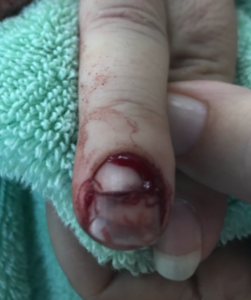
Pediatric Hand Fracture Treatment in Raleigh, NC
Understanding Pediatric Hand Fractures
Hand fractures are among the most common injuries in children, accounting for the second highest number of emergency department visits for fractures in the United States. Most children with hand fractures recover completely with appropriate treatment.
What Are Pediatric Hand Fractures?
Hand fractures in children involve breaks in the small bones of the fingers (phalanges) or the hand (metacarpals). Children’s bones are different from adult bones—they have growth plates (physes) and can sometimes bend or buckle rather than break completely.
Common Types of Hand Fractures in Children
Phalangeal Fractures (Finger Bones)
– Most common type of pediatric hand fracture
– Highest incidence in children aged 10-14 years
– Often occur during contact sports or from crush injuries at home
– Salter-Harris type II fractures of the proximal phalanx are most common
Buckle or Torus Fractures
– Stable fractures where the bone compresses or buckles
– Heal very quickly
– Considered minor injuries with pain as the main symptom
Displaced Fractures
– Bone fragments are out of alignment
– May require reduction (realignment) before treatment
How Are Pediatric Hand Fractures Diagnosed?
Diagnosis involves:
– Physical examination: Checking for swelling, tenderness, deformity, and proper finger alignment
– X-rays: Standard imaging to confirm the fracture and assess severity
– Assessment of rotation: Ensuring fingers align properly when making a fist
Treatment Options for Pediatric Hand Fractures
Treatment depends on the type and severity of the fracture. Most pediatric hand fractures heal well with conservative (non-surgical) treatment.
Conservative (Non-Surgical) Treatment
For Stable, Non-Displaced Fractures:
– Splint immobilization: Removable splints or buddy taping to adjacent finger
– Duration: Typically 3-5 weeks, though recent evidence suggests 3 weeks may be sufficient for many fractures
– Activity modification: Return to activities as comfort allows
– Pain management: Over-the-counter pain relievers as recommended by your doctor
For Buckle/Torus Fractures:
– Simple bandage or soft wrap may be sufficient
– Removable splints are as effective as rigid casts
– Immediate discharge from emergency department is often appropriate
– No routine follow-up X-rays needed for stable fractures
For Minimally Displaced Fractures:
– May require closed reduction (realignment without surgery)
– Immobilization with splint or cast
– Follow-up to ensure fracture stays in proper position
Surgical Treatment
Surgery is reserved for specific situations:
– Unstable, displaced fractures that cannot be held in position with splinting alone
– Open fractures (bone breaks through skin)
– Fractures with significant rotational deformity
– Fractures that lose position after closed reduction
Surgical Options:
– Closed reduction with percutaneous pinning (small wires placed through skin)
– Open reduction and internal fixation (for complex fractures)
What to Expect During Recovery
Healing Timeline
– Buckle fractures: 3 weeks
– Stable fractures: 3-5 weeks
– Displaced fractures: 4-6 weeks
– Complete return to sports: 6-8 weeks typically
Expected Outcomes
The prognosis for pediatric hand fractures is excellent:
– Most children achieve full recovery with normal function
– Children’s bones have remarkable healing capacity
– Growth plate injuries rarely cause long-term problems when properly treated
– Serious complications are uncommon
Potential Complications (Rare)
– Loss of fracture position requiring re-reduction
– Stiffness (usually resolves with time)
– Rotational deformity (occurs in less than 1% of cases)
– Growth disturbance (very rare)
Frequently Asked Questions
Does my child need a cast?
Not always. Many stable hand fractures heal well with removable splints or even simple bandages, which are more convenient and equally effective.
When can my child return to school?
Most children can return to school within a few days, with activity modifications as needed.
When can my child return to sports?
This depends on the fracture type and healing progress. Your doctor will provide specific guidance, but typically 4-8 weeks.
Will my child need physical therapy?
Most children regain full hand function naturally and do not require formal physical therapy.
Can the fracture heal incorrectly?
Children’s bones have remarkable ability to remodel and correct minor deformities as they grow. Your doctor will monitor healing to ensure proper alignment.
Conclusion
Pediatric hand fractures are common but generally heal very well with appropriate treatment. Most children recover completely and return to all normal activities. Work closely with your child’s healthcare team to ensure the best possible outcome.
Why Choose Dr. Chambers for Hand and Elbow Care
At Raleigh Orthopaedic Clinic, Dr. Stephen Chambers specializes in hand and upper extremity surgery. With years of expertise in treating hand and elbow injuries, including Pediatric Hand Fracture Injury Treatment.Dr. Chambers provides comprehensive care—ranging from at home treatments and injections to advanced hand surgery when needed. Patients trust Dr. Chambers and his team for personalized care, effective treatment options, and excellent outcomes and describe Dr. Chambers as a caring, attentive, and skilled surgeon with excellent bedside manner. His amazing team ensures every patient feels supported and informed throughout the process.
If you are experiencing wrist pain, swelling, or difficulty with wrist movements, don’t wait for symptoms to worsen. Schedule an Appointment with Dr. Chambers today to Pediatric Hand Fracture Injury Treatment.and get back to normal use of your hand . Experience the benefit of specialized hand care close to home at Raleigh Orthopaedics in Raleigh, Cary, Holly Springs, and Wake Forest, North Carolina.