
Olecranon Bursitis Treatment in Raleigh, NC
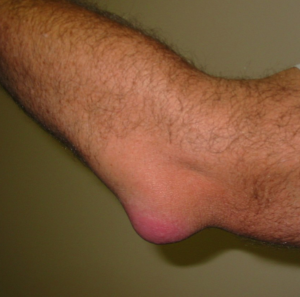
A soft, egg-shaped swelling over the tip of your elbow? Olecranon bursitis — "student's elbow" — is a fluid-filled sac at the elbow tip that is usually painless and often resolves on its own. When infected, it requires prompt drainage.
What Is Olecranon Bursitis?
The olecranon bursa is a small fluid-filled sac that normally cushions the tip of the elbow. When irritated — from repetitive pressure, trauma, or infection — it fills with excess fluid and visibly swells. Causes include: prolonged leaning on hard surfaces (students, office workers), direct trauma, inflammatory arthritis (gout, rheumatoid), and bacterial infection (septic bursitis).
Distinguishing non-infected from infected bursitis is critical — infected bursitis requires antibiotics and drainage; non-infected bursitis can be observed or aspirated. Staphylococcus aureus is the most common infecting organism, often entering through a small wound at the elbow tip.
ⓘ Signs of infected bursitis: warmth, redness, tenderness, fever, or a wound near the elbow tip. Infected bursitis requires prompt aspiration for culture and antibiotics. Do not delay — septic bursitis can spread to the joint.
Risk Factors
Several factors increase the likelihood of developing this condition.
Prolonged Desk Work
Repetitive elbow tip pressure on hard surfaces
Contact Sports
Direct elbow trauma
Manual Labor
Crawling on hard floors (plumbers, miners)
Rheumatoid / Gout
Inflammatory causes of bursitis
Direct Trauma
Blow to the elbow tip
Skin Break
Entry point for bacteria — septic bursitis
Diagnosis
Olecranon bursitis is diagnosed clinically. Aspiration (draining with a needle) is performed when infected bursitis is suspected — fluid sent for culture, cell count, glucose, and crystals (for gout). X-rays assess for underlying olecranon fracture or osteophytes.
- ✓Clinical assessment for signs of infection
- ✓Aspiration with fluid analysis (if infection suspected)
- ✓Fluid culture and sensitivity
- ✓Crystal analysis (uric acid crystals = gout)
- ✓X-rays to assess for fracture or osteophytes
- ✓Blood work (WBC, CRP, uric acid) if systemic disease suspected
Treatment Outcomes & Statistics
Published outcome data to help you make an informed decision.
Non-infected bursitis — 50% recur after aspiration without injection
Better resolution rate when cortisone added to aspiration
Bursectomy — very low recurrence rate
Septic bursitis — oral or IV antibiotics 4–6 weeks with serial aspiration
Complication Profile
| Complication | Rate | Severity | Notes |
|---|---|---|---|
| Recurrence after aspiration | 40–70% | Moderate | High without surgical removal of bursa wall |
| Skin breakdown / fistula | 5% | Moderate | More common with repeated aspiration through same site |
| Infection after injection | <1% | Rare/Serious | Cortisone contraindicated if infection suspected |
| Wound healing issues (surgery) | 5–10% | Moderate | Thin elbow skin — careful closure critical |
Source: Reilly et al., J Shoulder Elbow Surg; Perez et al., JBJS
Treatment Options
Dr. Chambers will recommend the best approach based on your severity, goals, and lifestyle.
Compression & Elbow Padding
A compressive elbow sleeve and padded elbow protector prevent further trauma and apply gentle pressure — effective for non-infected traumatic bursitis. Many cases resolve with this alone over 4–6 weeks without aspiration.
Aspiration ± Cortisone Injection
Needle drainage removes the fluid, providing immediate visual improvement. Cortisone added to the aspiration improves resolution rates. Fluid sent for culture when infection is suspected. May need to be repeated.
Bursectomy (Bursa Removal)
Complete surgical removal of the bursa wall — the only definitive treatment. Very low recurrence rate (<5%). Recommended for recurrent non-infected bursitis, chronic bursitis, or infected bursitis not responding to drainage and antibiotics.
What to Expect During Recovery
Wound Healing
Compressive dressing post-surgery. Elbow elevated. Careful wound care at elbow tip.
Suture Removal
Stitches removed at 14 days. Compressive sleeve continued. Light elbow use.
Full Recovery
Full elbow motion and activity. Compressive sleeve for protection during high-risk activities.
Frequently Asked Questions
Non-infected olecranon bursitis is not dangerous — it is a nuisance condition that often resolves on its own. Infected (septic) bursitis requires prompt treatment with antibiotics and drainage. If untreated, septic bursitis can spread to the elbow joint (septic arthritis) — which is a serious complication requiring urgent surgical washout.
Infected bursitis typically has warmth, redness, significant tenderness at the elbow tip, and sometimes fever or skin breakdown. Non-infected bursitis is often soft, not particularly warm, and may be minimally tender. Any doubt — see Dr. Chambers promptly. Aspiration with fluid analysis distinguishes them definitively.
No — home drainage risks introducing bacteria and causing septic bursitis. Aspiration should be performed under sterile conditions in a medical office. It is a quick, low-risk procedure when done correctly.
Elbow Bump or Swelling? Get It Evaluated.
Most olecranon bursitis is benign — but infected cases need prompt care. No referral needed.

Stephen Chambers, M.D.
Dual Board-Certified Hand & Upper Extremity Surgeon · Raleigh Orthopaedic