

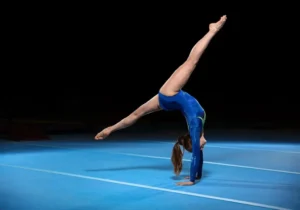
Gymnast's Wrist Treatment in Raleigh, NC
Wrist pain in a young gymnast that gets worse on the beam or floor? Gymnast's wrist is a growth plate stress injury unique to young athletes — missing it risks permanent growth disturbance. Early diagnosis protects the wrist for life.
What Is Gymnast's Wrist?
Gymnast's wrist (distal radial physeal stress injury) is a repetitive stress injury to the growth plate (physis) of the radius in young gymnasts. During weight-bearing skills, the distal radial physis sustains compressive and shear forces 2–3× body weight with each landing or hold. The growing cartilage physis — the weakest part of the young bone — responds with stress changes that appear on MRI before any X-ray changes.
If not adequately rested, the physis can partially close prematurely — causing the ulna to become relatively long (positive ulnar variance), leading to chronic wrist pain, TFCC problems, and potential need for surgery. This is entirely preventable with early diagnosis and proper rest.
ⓘ Premature physeal closure is preventable. Early diagnosis and appropriate rest prevent the growth plate from closing prematurely. Returning to gymnastics too soon is the primary cause of this complication.
Risk Factors
Gymnast's wrist is a sport-specific overuse injury.
Gymnastics
Weight-bearing on open growth plates — defining risk factor
Growth Spurt (Age 10–14)
Physis is fastest-growing and most vulnerable
High Training Volume
More hours per week = proportionally higher risk
Competitive Level
Elite and pre-elite gymnasts at highest risk
Female Athletes
More common in girls — longer growth spurt
Poor Technique
Hyperextended wrist positions amplify compressive force
How Gymnast's Wrist Progresses
MRI shows stress changes. X-ray may show mild physeal widening. Rest resolves.
Physeal irregularity and lucency on X-ray. Longer rest required.
Partial or complete premature physeal closure. Ulnar variance developing. May require surgery.
Diagnosis
Gymnast's wrist is diagnosed with X-rays (bilateral for comparison) and MRI. MRI detects physeal stress injuries before X-ray changes appear and is the gold standard for early diagnosis. Physeal width is compared bilaterally.
- ✓Bilateral wrist X-rays (PA, lateral)
- ✓MRI — gold standard for early physeal stress
- ✓Ulnar variance measurement
- ✓Grip strength bilateral comparison
- ✓Assessment for TFCC injury if physeal closure has occurred
Treatment Options
Dr. Chambers recommends the best approach based on your individual presentation and goals.
Relative Rest & Activity Modification
The primary treatment is relative rest from weight-bearing gymnastics. Non-weight-bearing upper body conditioning is maintained. Duration depends on grade — 4–12 weeks. A structured return-to-sport program with progressive loading follows.
Wrist Splint
A removable wrist splint during non-gymnastics activities reduces physeal stress and provides pain relief during the rest period.
Corrective Osteotomy (If Premature Closure Occurs)
If premature physeal closure causes significant radial shortening and positive ulnar variance, radial lengthening or ulnar shortening corrects the deformity and prevents long-term TFCC and wrist arthritis problems.
Recovery Timeline
Relative Rest
No weight-bearing gymnastics. Lower body conditioning maintained. Wrist splint as needed.
Partial Return
Non-weight-bearing upper body activities. Handstands and tumbling still restricted.
Graduated Return to Sport
Progressive return — non-weight-bearing skills first, then partial, then full weight-bearing.
Monitoring
X-rays every 3–4 months during growth. Technique modification and training load management with coaches.
Frequently Asked Questions
Yes — with proper treatment, the vast majority of gymnasts make a full return to competitive gymnastics. The key is adequate rest during the acute phase (4–12 weeks depending on grade), followed by a structured graduated return program. Premature return is the main cause of progression to permanent growth plate damage.
A wrist sprain is a ligament injury. Gymnast's wrist is a growth plate stress injury — an entirely different structure is affected. Growth plate injuries in young athletes require special attention because the physis is open and vulnerable to permanent damage that a ligament sprain would not cause. Always get specialist evaluation for wrist pain in a young gymnast rather than dismissing it as a sprain.
No — the goal is a structured return to sport after appropriate healing. Long-term management includes technique coaching, training load monitoring, and wrist guards for certain skills. Most gymnasts return to full competitive gymnastics without long-term restrictions.
Related Conditions & Resources
Wrist Pain in Your Young Gymnast? Get It Evaluated.
Growth plate injuries need specialist evaluation. Same-week appointments. No referral needed.

Stephen Chambers, M.D.
Dual Board-Certified Hand & Upper Extremity Surgeon · Raleigh Orthopaedic