

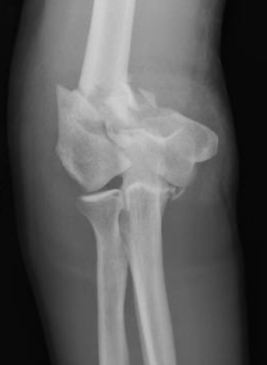
Elbow Fracture Treatment in Raleigh, NC
Fell and landed on your elbow or outstretched hand? Elbow fractures range from minor radial head cracks to complex distal humerus breaks. Prompt specialist evaluation ensures you get the right treatment — preventing stiffness, arthritis, and deformity.
What Is Elbow Fracture?
Elbow fractures involve three main bone types: radial head fractures (the most common, from FOOSH — fall on outstretched hand), olecranon fractures (the elbow tip — from direct impact or triceps pull), and distal humerus fractures (complex, often requiring surgery). Each has specific treatment considerations and recovery timelines.
Elbow stiffness is the most common long-term complication — the elbow is notoriously intolerant of prolonged immobilization. Early controlled motion is therefore a priority after fracture treatment, particularly after surgical fixation.
ⓘ Elbow stiffness is the #1 long-term problem after elbow fractures — much more common than in other joints. This is why Dr. Chambers prioritizes early motion rehabilitation and minimizes immobilization time whenever possible.
Risk Factors
Several factors increase the likelihood of developing this condition.
Fall on Outstretched Hand
Radial head fractures — most common mechanism
Direct Impact
Olecranon fractures from direct blow
Snowboarding / Cycling
High-energy falls
Osteoporosis
Elderly — complex distal humerus fractures
Contact Sports
Blocking and collision injuries
Gymnastics
Landing falls
Stages of Elbow Fracture
Most common elbow fracture. Non-displaced — treated conservatively with excellent results.
Displaced radial head or olecranon fracture requiring fixation.
Complex articular fracture — usually requires surgical fixation or total elbow arthroplasty in elderly.
Diagnosis
Elbow fractures are diagnosed with X-rays in AP, lateral, and oblique views. CT scan is invaluable for complex articular fractures. The ulnar and radial nerves are carefully assessed. A fat pad sign on lateral X-ray indicates an occult radial head fracture when no fracture line is visible.
- ✓X-rays (AP, lateral, oblique)
- ✓CT scan for articular fractures
- ✓Fat pad sign on lateral view (occult radial head fracture)
- ✓Ulnar nerve assessment
- ✓Radial nerve / PIN assessment
- ✓Vascular assessment (brachial artery with high-energy injuries)
Treatment Outcomes & Statistics
Published outcome data to help you make an informed decision.
Excellent outcomes with early motion and brief sling
Good/excellent results — reliable union with plate fixation
Complex procedure — good results with experienced surgeon
Some permanent loss of full extension common after elbow fractures
Complication Profile
| Complication | Rate | Severity | Notes |
|---|---|---|---|
| Elbow stiffness | 30–50% | Moderate | Most common complication — prevented with early motion |
| Ulnar nerve injury | 5–10% | Moderate | Particularly with distal humerus fractures |
| Hardware irritation | 10–15% | Minor | Olecranon plate commonly removed after healing |
| Post-traumatic arthritis | 10–20% | Moderate | Higher rate with articular fractures |
| Heterotopic ossification | 5–10% | Moderate | Bone formation in soft tissues — limits motion |
Source: Caravaggi et al., JBJS; Ring et al., J Hand Surg; McKee et al., JBJS
Treatment Options
Dr. Chambers will recommend the best approach based on your severity, goals, and lifestyle.
Sling & Early Motion
Non-displaced or minimally displaced radial head fractures are treated with a sling for 1–2 weeks followed by immediate range-of-motion exercises. Prolonged immobilization causes stiffness — early motion is the key to a good outcome.
ORIF (Open Reduction Internal Fixation)
Displaced radial head, olecranon, and distal humerus fractures are stabilized with screws, plates, or pins. Rigid fixation allows early elbow motion — critical for preventing stiffness. Dr. Chambers uses low-profile implants to minimize hardware irritation.
Radial Head Replacement
For severely comminuted radial head fractures that cannot be reconstructed, a metal radial head prosthesis restores elbow stability and allows immediate motion. Superior to excision in complex fracture-dislocations.
What to Expect During Recovery
Initial Treatment
Sling or surgical fixation. Begin elbow range-of-motion exercises as soon as possible — even within days after ORIF.
Motion Recovery
Active elbow flexion and extension exercises. Hand therapy formal program if stiffness developing.
Strengthening
Progressive elbow and grip strengthening. Return to most daily activities and modified work.
Full Recovery
Full return to work and sport. Some permanent extension loss (10–20°) is common and usually not functionally significant.
Frequently Asked Questions
It depends on the fracture type and displacement. Non-displaced radial head fractures — the most common elbow fracture — are treated without surgery with excellent results. Displaced radial head, olecranon, and most distal humerus fractures require surgical fixation. Dr. Chambers will review your X-rays and CT scan to give you a specific recommendation.
The elbow is uniquely prone to stiffness after injury because the joint capsule and ligaments contract rapidly when immobilized. This is why early motion — often within days of surgery — is prioritized. Even with optimal care, some permanent loss of full extension is common after elbow fractures but is usually not functionally significant.
Olecranon plates sit directly under thin skin at the elbow tip and frequently cause irritation — about 50% of patients have the plate removed after healing, which is a straightforward procedure. Radial head and distal humerus hardware is deeper and less commonly removed unless symptomatic.
Elbow Fracture? Get Evaluated This Week.
Proper treatment prevents lifelong stiffness. Same-week appointments at all Triangle locations. No referral needed.
Stephen Chambers, M.D.
Dual Board-Certified Hand & Upper Extremity Surgeon · Raleigh Orthopaedic